
Training foundations
How strength training holds up after 45
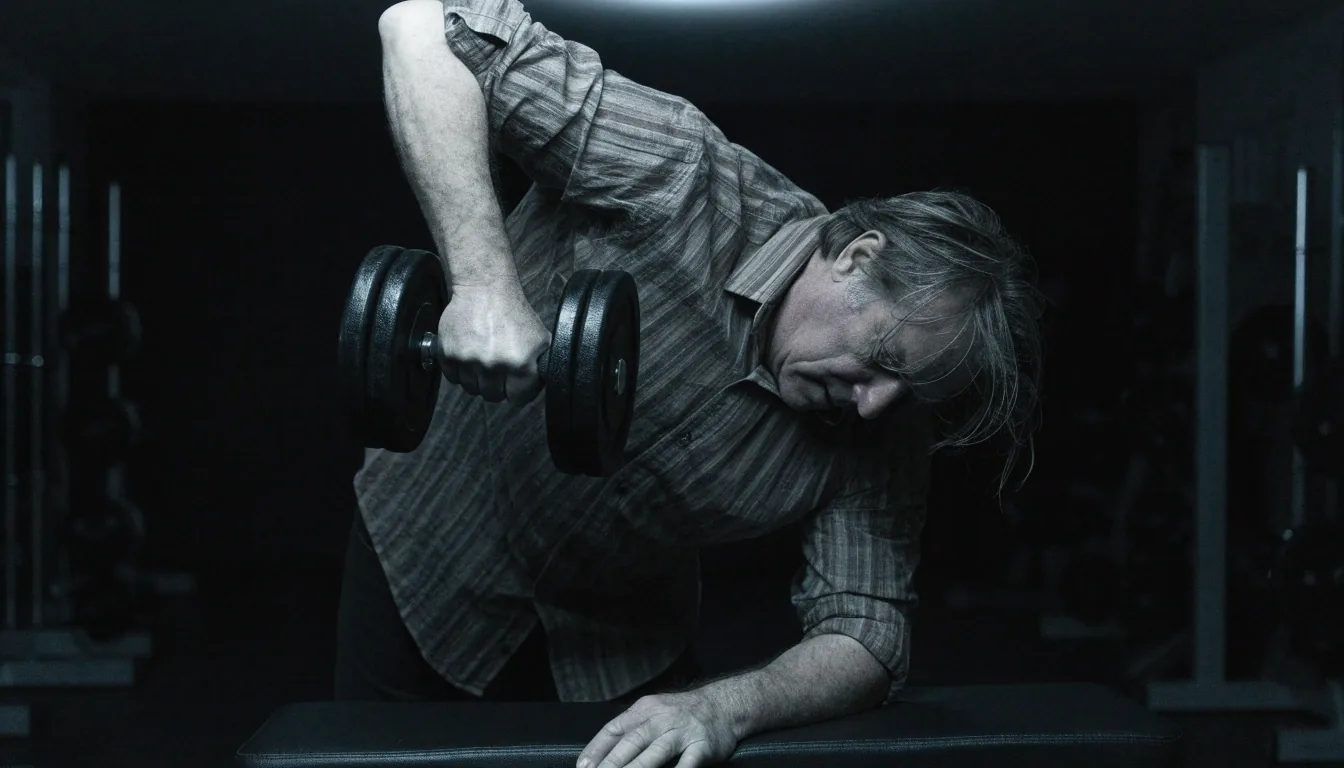
Three variables decide almost everything: how often you lift, how hard you work, and how you add load. Get those right and the rest of the plan becomes easier to hold onto.
The four moving parts
- 01 Frequency
- 02 Effort
- 03 Progression
- 04 Recovery
What the research points to
The UK Chief Medical Officers' physical activity guidelines ask adults to build muscle-strengthening activity into most weeks, and to keep it going as they age. That advice is not aimed at athletes. It is aimed at anyone who wants to keep lifting a suitcase, walking a hill, or getting up off the floor without negotiating with their knees.
What changes after 45 is less about the exercises and more about the margins. Tendons and connective tissue adapt more slowly than muscle, joints take longer to warm up, and the recovery window between hard sessions stretches. The principles below are the ones that keep that difference from turning into a setback.
How often to lift
Two full-body sessions a week is the honest starting point for most men over 45 returning to resistance training. Three sessions work well once the first month has passed without lingering soreness. More than four is rarely the reason progress stalls — too little recovery between them usually is.
If two sessions still leave you stiff for three days, the answer is not a fourth session — it is less load, more warm-up, or a closer look at sleep and food. Frequency is a dial you turn slowly, not a competition.
How hard to work
Effort is where mature lifters tend to drift in both directions: too light to matter, or so heavy that form breaks down before the set ends. The useful range sits somewhere in between, and you can find it without a coach watching every rep.
Working range
Two to three reps left in the tank
Pick a load you could lift for two or three more clean reps after the set ends. That is hard enough to drive adaptation and light enough that your last rep looks like your first.
- 01 Sets of 6 to 10 reps on compound lifts
- 02 Two or three working sets per exercise
- 03 Stop the set when speed drops, not when it hurts
Where to slow down
Signs the load has gone past useful
A hard set is not the same as a bad set. If any of the following shows up, drop the weight by 10 to 20 percent and rebuild the rep quality before adding load again.
- 01 Holding your breath through the whole rep
- 02 Torso shifting to one side on a press or pull
- 03 Joint ache that stays past the warm-up
Load before ego
Progress is a smaller number than you think
How to progress load safely
Progressive overload sounds technical. In practice it means adding a small amount of work over time and letting the body catch up before the next addition. For most men over 45, the smallest possible increase wins — and the increase does not have to be weight.
Add one rep
Same load, same sets. Take the rep count from 8 to 9 across all working sets before you touch the plates. This is the safest first move and the one most lifters skip.
Add a small plate
Once you hit the top of your rep range on every set, add the smallest plate the gym has — usually 1.25kg or 2.5kg. Drop back to the bottom of the range and build up again.
Change one thing, not five
If two weeks pass without progress, adjust tempo, rest, or one exercise variation. Changing the whole programme at once tells you nothing about what worked.
Write the numbers down. Not in an app you will ignore, but somewhere you will see before the next session — a page in a notebook or a note on your phone. Load progression without a record becomes guesswork within a month.
Compound lifts carry the plan
Compound lifts move more than one joint and load more than one muscle group in a single set. For mature men, that efficiency matters — fewer exercises, shorter sessions, more useful work per rep.
A reasonable foundation covers a squat or leg-press pattern, a hinge, a horizontal push, a horizontal pull, a vertical push, and a carry. Six movements, two or three sets each, and the session is done.
Warm-up, technique, and when to stop
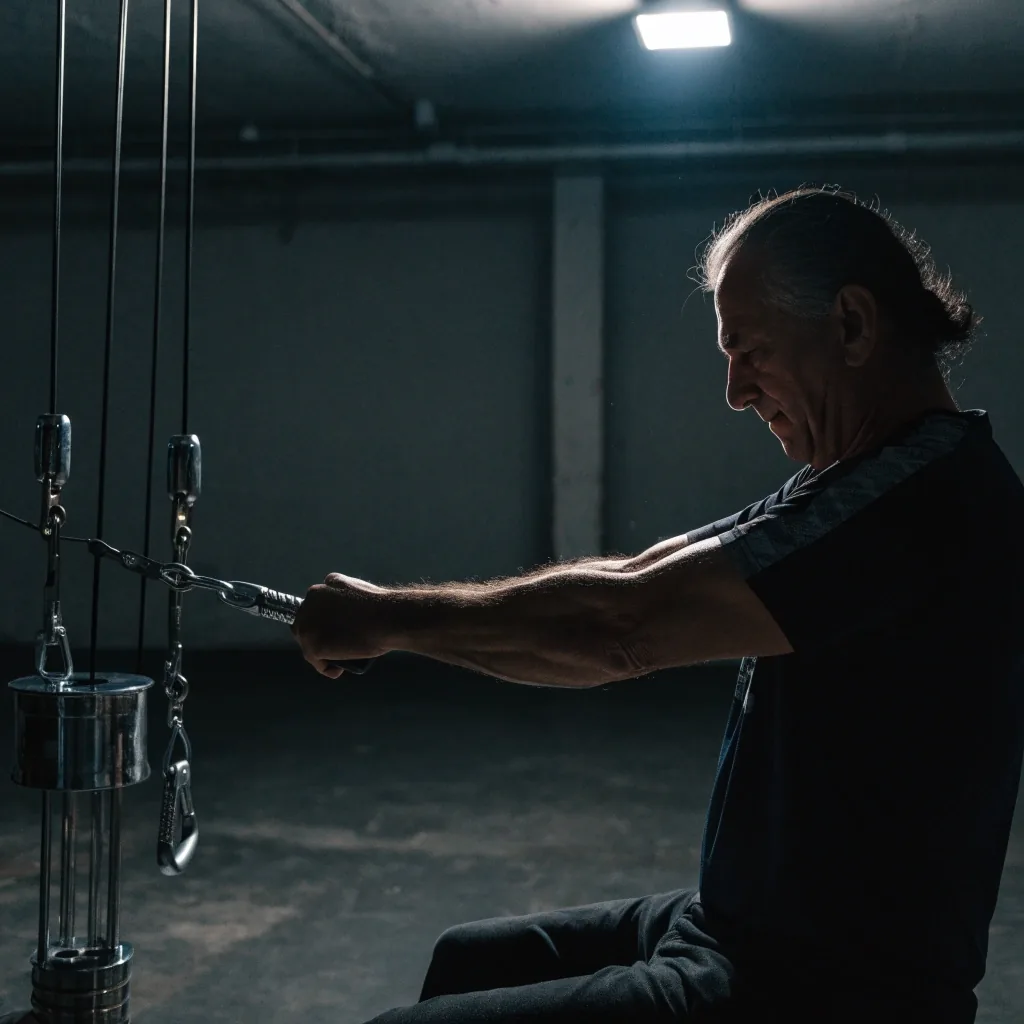
Warm up to the load, not just the room
Two or three progressively heavier sets of the first exercise prepare joints better than ten minutes of cycling. Cold muscles under a heavy bar is the most common cause of a stalled session.
Technique is the load-bearing habit
Neutral spine, controlled lowering, full breath out on the effort. If you cannot keep form on rep eight, the set was over at rep six. That is not failure — that is the point of the set.
Sharp pain ends the session
Sharp, sudden, or one-sided pain is not something to push through. Stop, note which movement produced it, and speak to a GP or physiotherapist before returning to that pattern. Dull effort in the muscle is different and expected.
If you are returning to training after a long gap, or managing a diagnosed condition, ask your GP or a qualified instructor to check the plan before you start. This page explains general principles — it is not medical advice for your specific case.
Common questions about starting out
Do I need to train to failure?
No. Leaving two or three reps in reserve gives nearly the same strength response without the recovery cost. Training to failure every set works for some younger lifters with fast recovery; after 45 it usually means the next session suffers.
How long before I see progress?
Most people notice easier reps within three to four weeks, and a clear load increase in six to eight weeks of consistent training. Strength moves faster than visible muscle change — that lag is normal and not a sign the programme is failing.
Can I use machines instead of free weights?
Yes. Machines remove some of the balance demand, which is useful if joints are sensitive or you are returning after a break. A mix of both — machines for heavy work, free weights for control and stability — suits most mature lifters well.
What about cardio alongside lifting?
Keep it. Walking, cycling, and swimming support the same goals and help with the aerobic side that strength work does not cover. The practical rule is to separate hard cardio from hard lifting by a day, or to place short easy cardio after lifting rather than before.
How do I fit this into a working week?
Two 45-minute sessions, spaced by at least two days, are enough to make real progress. Early mornings and weekend sessions work well for most people, but the schedule matters less than whether you actually repeat it every week.
Keep going
Pick the next page and keep the momentum
The exercise library shows joint-friendly versions of the compound patterns above, the recovery page covers what happens between sessions, and the evidence page lists where the guidance on this site comes from.