Mature Male Power Mature Male Power
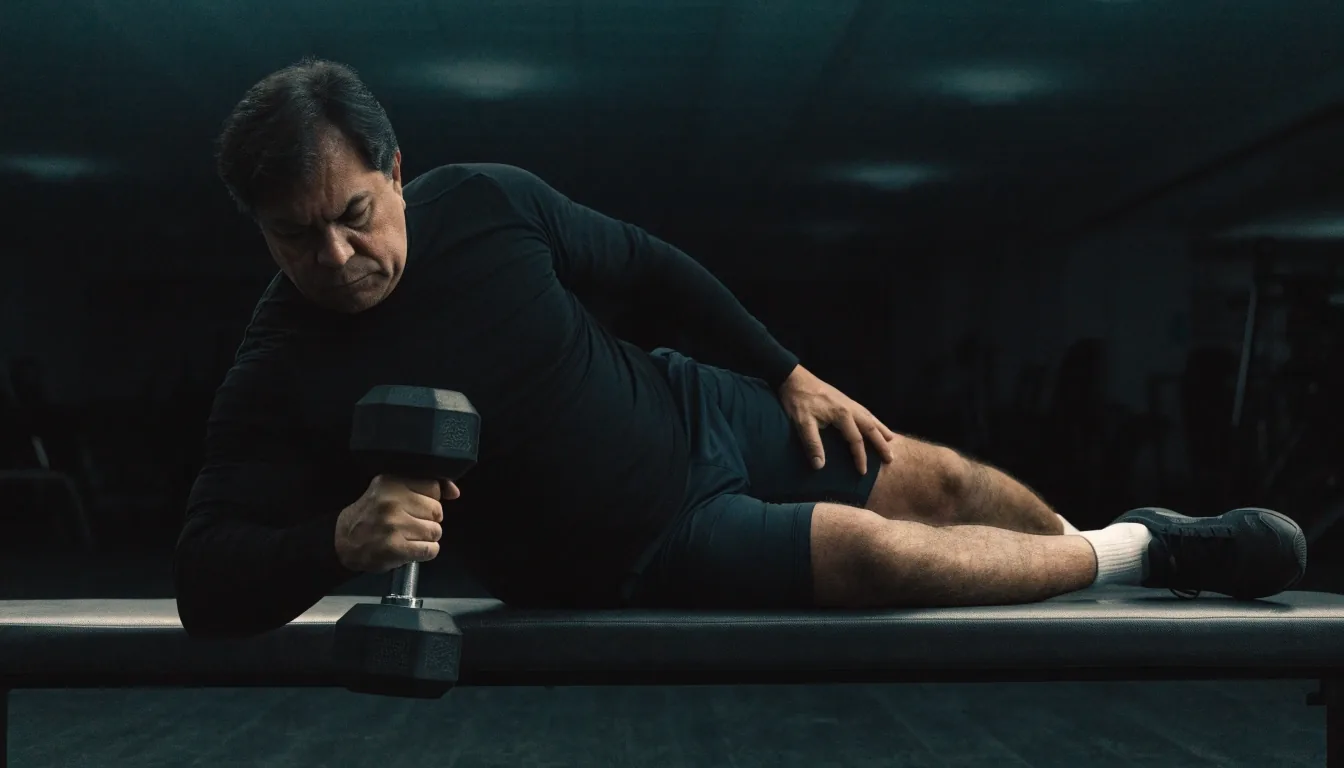
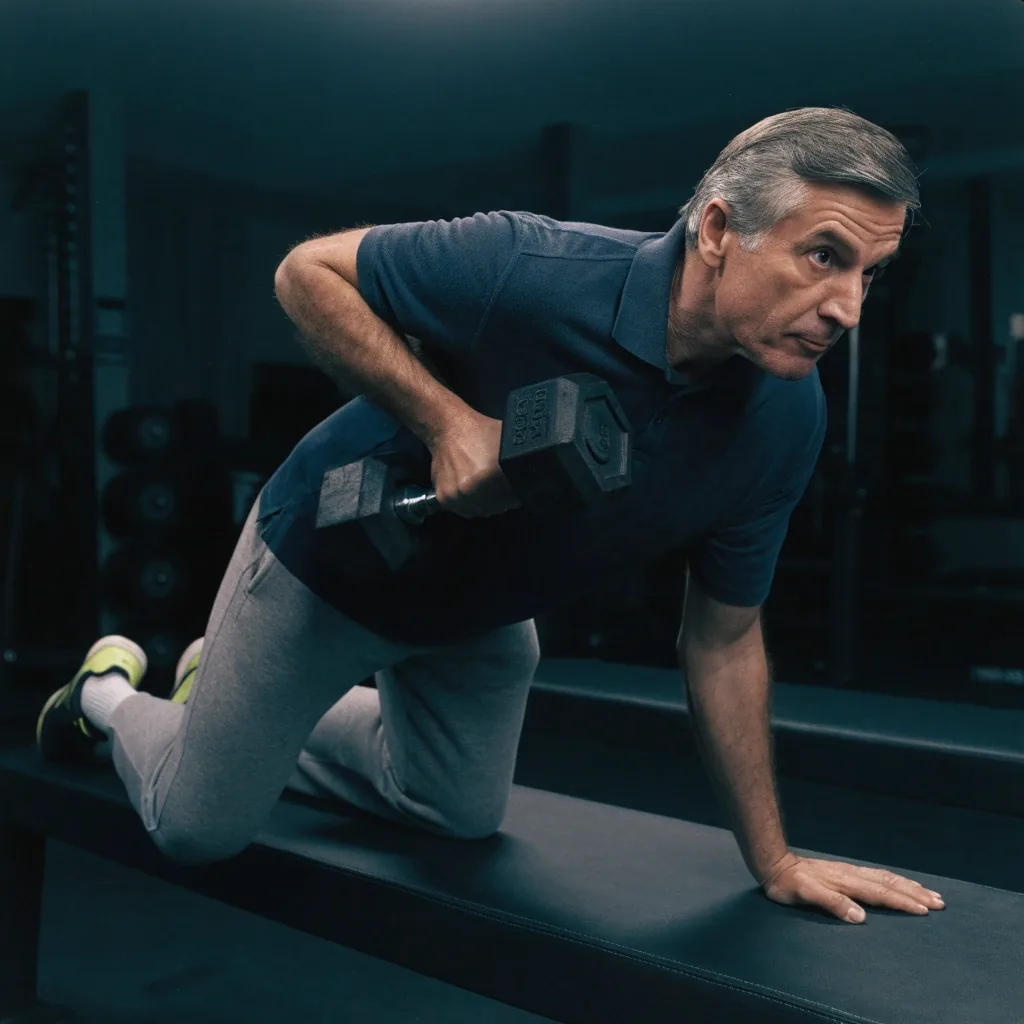
A man in his fifties performing a controlled single-arm dumbbell row on a flat bench in a cold-lit gym

Exercise library

Joint-Friendly Exercise Library

Choose and adapt the movements that keep training possible: dumbbell rows, cable work, unilateral sets, isometrics, and slow tempos that protect joints while building balanced strength.

  • 01 Screen the joint
  • 02 Pick the pattern
  • 03 Adapt the load
  • 04 Progress and recover

How to choose an exercise when a joint complains

Most men over 45 do not need to stop training a movement. They need to change how it is loaded, how far it travels, and how fast it happens. A dumbbell row that hurts at a heavy weight with a fast pull can feel entirely different at a lighter weight with a two-second pause at the top. The joint is often fine with the pattern — it is objecting to the dose.

Work through the questions below in order. Each one narrows the exercise until what remains is something you can repeat twice a week without paying for it the next morning. If a joint stays sore through a full session at the lightest useful load, that is a signal to stop and get it looked at, not to push through.

Does it hurt during the set, or only after?

A sharp feeling during the working range usually means the position is wrong for you today. Soreness that arrives hours later and fades within a day or two is ordinary training response. Treat the first as a reason to adjust the exercise; treat the second as a reason to keep the plan steady.

Can you hold the top position for a count?

If you cannot pause for two seconds at the contracted position without the joint complaining, the load is ahead of your control. Drop the weight, hold the pause, and let the tendon catch up before you add plates back on.

Hands adjusting a plain matte knee sleeve over a bent knee before a training set against a pale wall

Load and range

Adapting dumbbell rows and cable work for older joints

The dumbbell row is one of the most useful upper-body movements a mature trainee can keep. It trains the back without loading the spine the way a bent-over barbell row does, and each side works on its own. Cable exercises for older men follow the same logic: a fixed path takes balance out of the equation, so the joint and muscle do the work while the machine handles the trajectory.

Two adjustments do most of the heavy lifting. First, support the torso — a bench, a chest pad, or a seated cable position. Second, shorten the range slightly at the painful end and own the range you keep. A row that travels from a full stretch to a full squeeze is not automatically better than one that travels a little less with control.

The library by movement family

Five families cover most of what a mature trainee needs. Each entry notes what the movement trains, the joint-friendly version to start with, and the cue that keeps it honest. Hover a row to read it against the plate.

01

Supported horizontal pull

Single-arm dumbbell row with one hand on a bench. Trains the mid-back and lats with the spine supported and each side loaded on its own. Start light, pause at the top, and keep the elbow close to the ribs.

02

Fixed-path cable pull

Seated or standing cable row with a neutral grip. The cable sets the line of pull, so you can focus on squeezing rather than balancing. Set the handle at lower-chest height and lean back only a few degrees.

03

Unilateral pressing and pulling

One arm or one leg at a time, with the free hand braced. Unilateral strength training exposes the weaker side early, when the fix is still a lighter set rather than a stalled programme.

04

Isometric holds

Isometric exercises for mature men work well on days when a joint is tender: hold a mid-range position for 20 to 40 seconds at a load you could move for a few reps. The muscle is loaded without the joint travelling through the painful arc.

05

Slow tempo repetitions

Lower the weight over three seconds and lift over one or two. Slow tempo raises the demand on the muscle without adding weight to the joint, and it makes a lighter load genuinely productive.

Pick the version that matches the joint, not the ego

Same movement family, two ways to run it. The left column is what most mature trainees start with when a joint has been noisy for a few weeks. The right column is the version to move toward once the joint has been quiet through several sessions at the easier setting.

Start here

Reduced range, paused, supported

  • 01 Two-second pause at the top of every rep, no bounce.
  • 02 Torso supported on a bench or chest pad throughout.
  • 03 Range shortened by a hand's width at the stretched end.

Then progress to

Full range, steady tempo, more load

  • 01 Full travel restored once the pause feels easy at the top.
  • 02 Tempo kept slow — three seconds down on every rep.
  • 03 Load added in small steps, only when the last set stays clean.
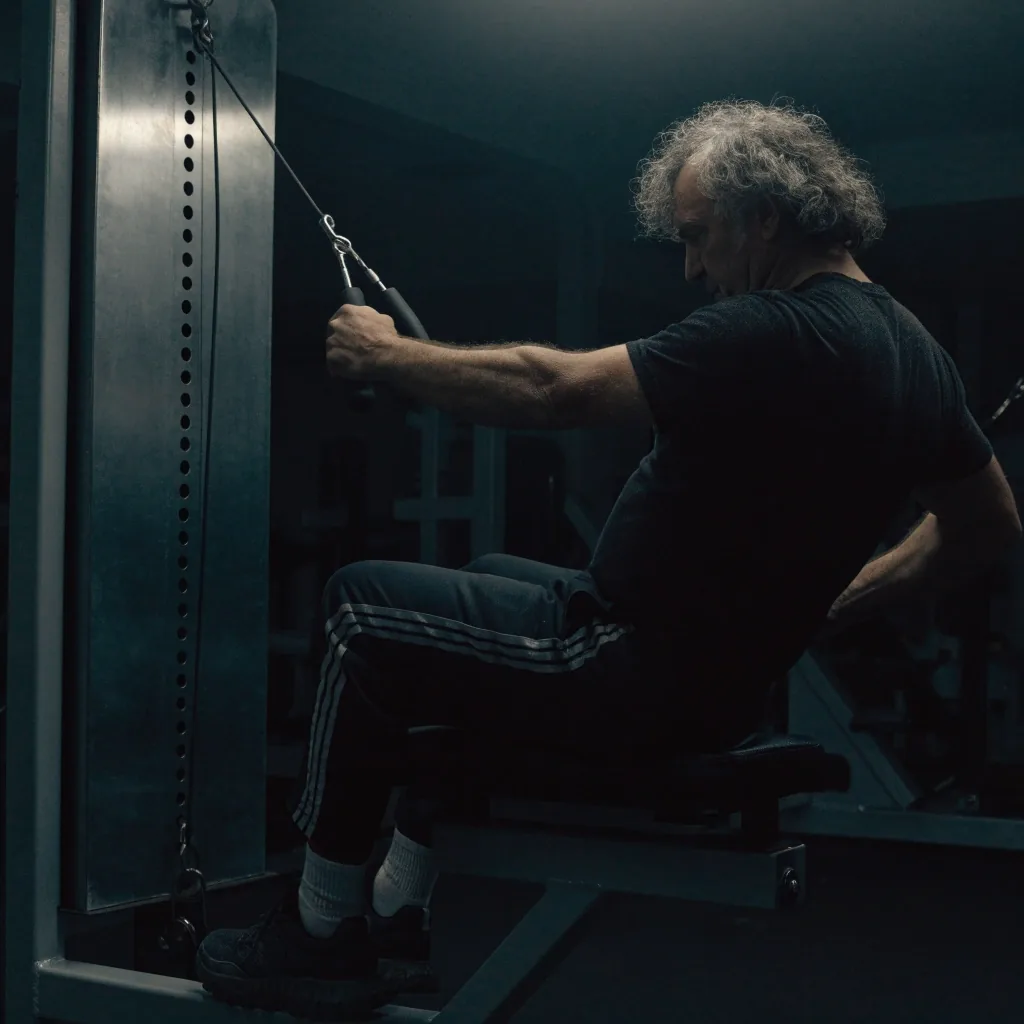
A man in his fifties performing a slow-tempo seated cable row seen from the side in a cold-lit gym

Cues that keep a set joint-friendly

Cues are not decoration. They are the difference between a set that builds the muscle and a set that irritates the joint. The four below apply across the whole library, whichever movement you are running.

  • 01

    Brace before you pull

    Set the trunk first, then move the load. A stable ribcage takes the strain off the shoulder and lower back at the same time.

  • 02

    Own the eccentric

    Lowering under control is where much of the useful work happens. Rushing the way down is the most common way a good movement turns into a sore joint.

  • 03

    Stop two reps short of a grind

    Leaving a little in reserve keeps technique intact and lets you train again in two days. The last grinding rep is rarely the one that made the difference.

  • 04

    Change one thing at a time

    If you alter the load, the tempo, and the range in the same week, you will not know which one helped. Adjust one variable, run it for two or three sessions, then decide.

Build the week before you build the load

A joint-friendly library only works inside a plan. Two or three full-body sessions a week, with a day of recovery between each, gives a mature trainee enough stimulus and enough time to adapt. The movements above slot into that shape; they do not replace it.

An empty rack of hex dumbbells under flat overhead light in a high-ceilinged gym

Session shape

Two or three full-body days

Each session covers a push, a pull, a hinge, and a single-leg movement. Keep the volume moderate and repeatable.

Sets per movement

Two or three working sets

Enough to stimulate the muscle without leaving the joint sore for days. Add a set before you add a plate.

Recovery window

A day between sessions

Tissue adapts between sessions, not during them. Walking, easy cycling, and mobility work fill the gap well.

Questions that come up most often

Is a dumbbell row safe if my shoulder has been sore?

Often yes, at a lighter load with the torso supported and a shorter range. Support takes the balance demand off the shoulder, and the shorter range keeps the joint away from the position that irritates it. If pain is sharp during the set, stop and have it assessed.

How do I know when to add weight?

Add weight when the top of the last set still feels controlled and the joint is quiet the next morning. Add the smallest jump available, run it for two sessions, and only then consider another step. Progress measured in weeks holds up better than progress measured in workouts.

Do isometrics replace regular strength work?

No. Isometric exercises for mature men are a useful bridge on days when a joint is tender, and a way to keep training a pattern while it settles. They sit alongside normal reps rather than replacing them, because moving a load through a range builds qualities a hold cannot.

How slow is slow tempo?

Around three seconds on the lowering phase is a good default for most trainees, with a normal-speed lift. Slower than that tends to make the set about endurance rather than strength, and it lengthens the session without adding much.

Can I train through mild joint discomfort?

Mild stiffness that eases as you warm up is usually fine to work through at a reduced load. Sharp pain, swelling, or a joint that feels unstable is a different situation — that is a reason to stop the session and seek advice rather than adapt around it.

Start with one movement this week

Pick the family that matches what your joints tolerate best, run the easier version twice, and see how the following morning feels. If you want help mapping the library onto your own week, get in touch and we will walk through it with you.

Where to continue

Mature Male Power, 15 Deansgate, Manchester, M3 1NW. Monday to Friday, 9:00 AM to 6:00 PM. Call +44 161 496 0834 or email [email protected].