Bone health and balance
Strength training that protects your bones
For men over 45 in the UK, the same sessions that build muscle also load bone and train balance. This page explains how, and what UK public health guidance actually asks of you each week.
Why bone reacts to load, not to walking alone
Bone is living tissue. It responds to strain it does not normally feel — a load heavier than your daily routine, applied through a joint at a controlled speed. Walking and swimming keep the heart working but ask very little of the skeleton, which is why the guidance below puts muscle-strengthening activity in its own line rather than folding it into general movement.
Peak bone mass is behind you, so the aim shifts
Most men reach peak bone mass in their late twenties. After that the goal is slowing loss and keeping what you have strong enough to take a fall.
Muscle is the delivery system for load
You cannot load a bone you cannot hold. Grip, back and leg strength decide how much strain reaches the skeleton before form breaks down.
Balance is trainable at any age
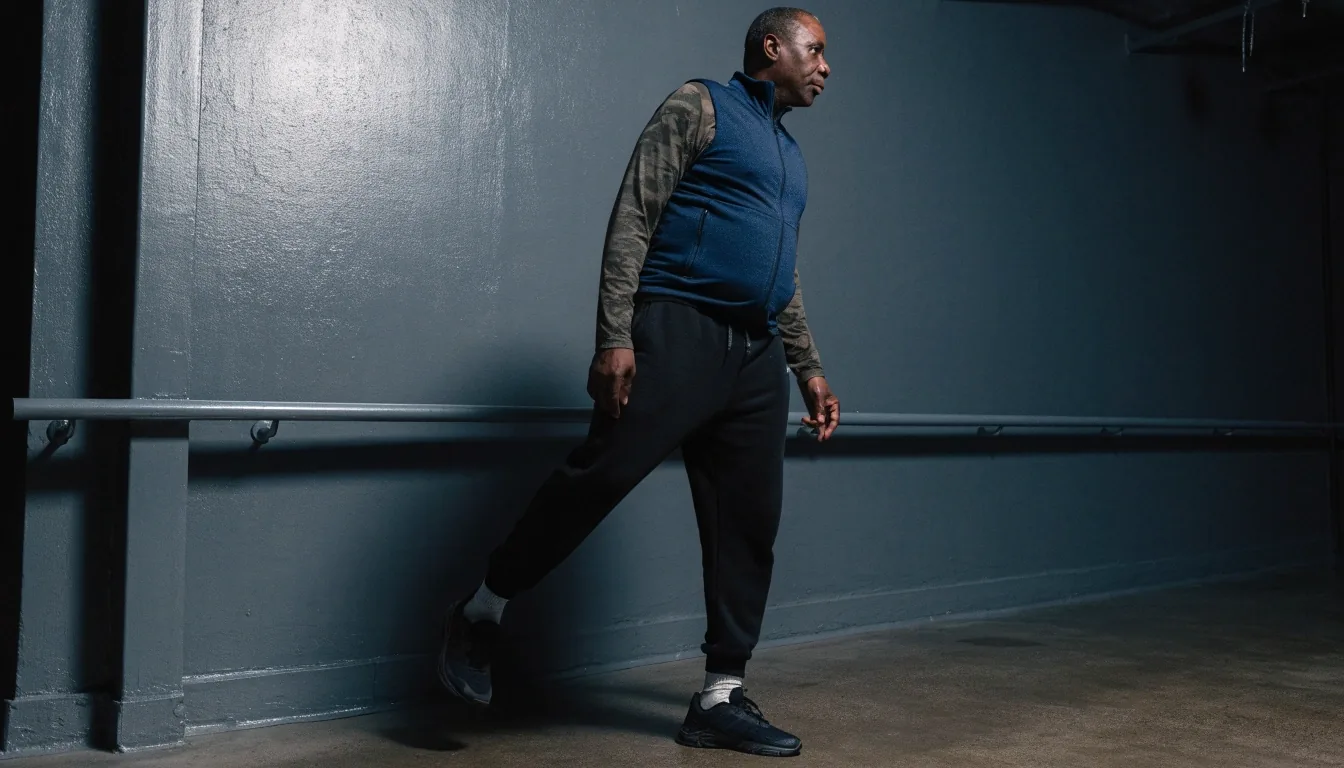
Single-leg stands, heel-to-toe walking and controlled direction changes are practice, not talent. They improve with repetition and they decay when you stop.
The first fall is the one that changes the story
A fracture in later life often starts a chain of lost confidence, less movement and faster decline. Reducing that risk is the point of the work.
What UK guidance asks
Twice a week, load the whole body
The UK Chief Medical Officers' physical activity guidelines set two separate targets for adults. One covers moderate activity that raises your heart rate. The other covers muscle-strengthening activity on at least two days a week, working all the major muscle groups. For older adults the same guidance adds balance and coordination work — and it names this separately, because strength alone does not remove the risk of a fall.
Read together, those two lines describe a week, not a workout. Two resistance sessions plus some balance practice is the floor. How you split it across the week matters less than whether it happens consistently and whether the load is heavy enough to be noticed by the bone.
A week that covers the guidance
Two resistance sessions of roughly 40 minutes, spaced at least a day apart, plus ten minutes of balance work on three or four other days.
If you are returning after a long break, start with one session and build the second in once the first stops leaving you sore for days.
What "load" actually means for bone
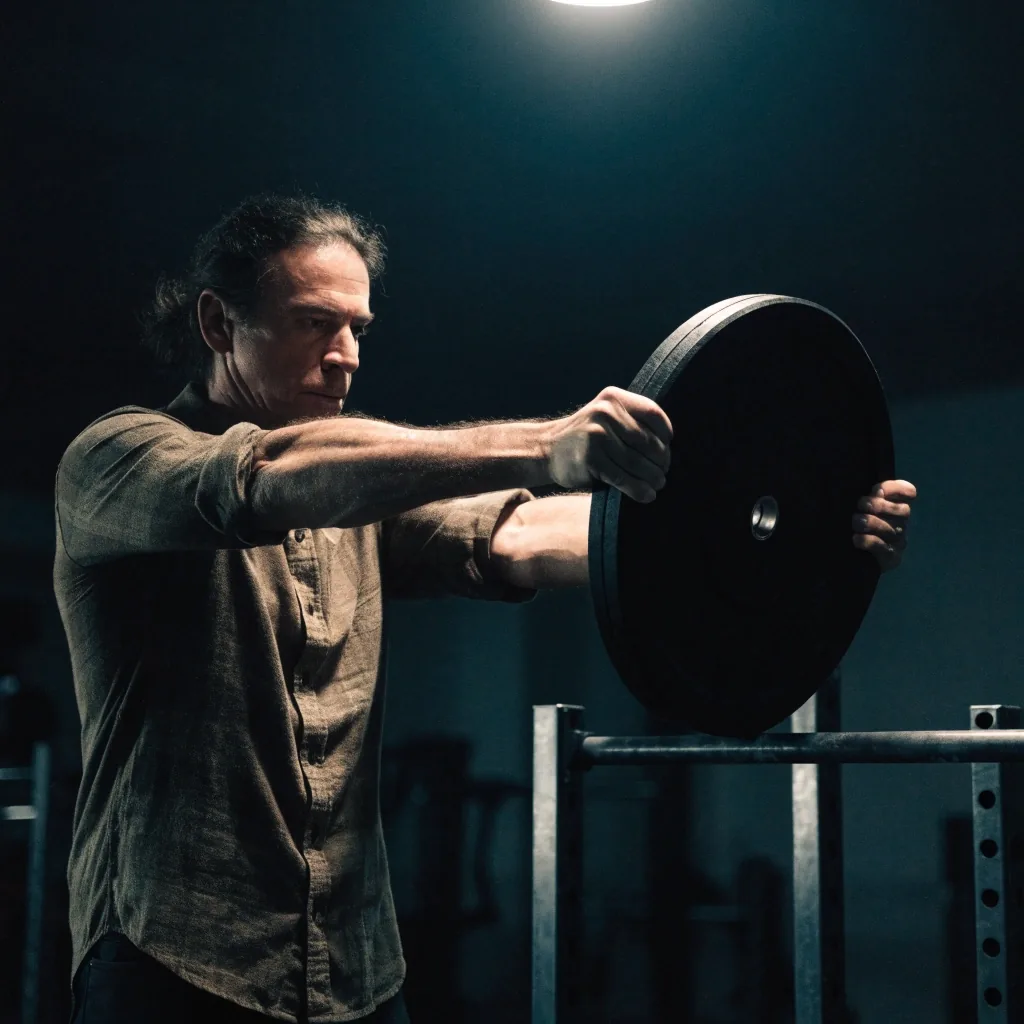
Bone adapts to strain that is unfamiliar and progressive. That is a different instruction from "lift until it burns". A set of twelve easy repetitions at a weight you have used for a year does very little for the skeleton, even if it makes the muscle tired.
Heavier than daily life
The load has to exceed what your skeleton already handles comfortably — carrying shopping, climbing stairs, standing up from a chair.
Progressed on purpose
Once you can complete the prescribed sets with clean form, the weight or the range moves up. That progression is the stimulus.
Through the whole skeleton
Squat and hinge patterns load the spine and hips; rows, presses and carries load the upper body and grip. Hips and spine fracture most often, so they are not optional.
Repeatable, not heroic
A weight you can control for every set, twice a week for months, beats one heavy day followed by two weeks off with a sore back.
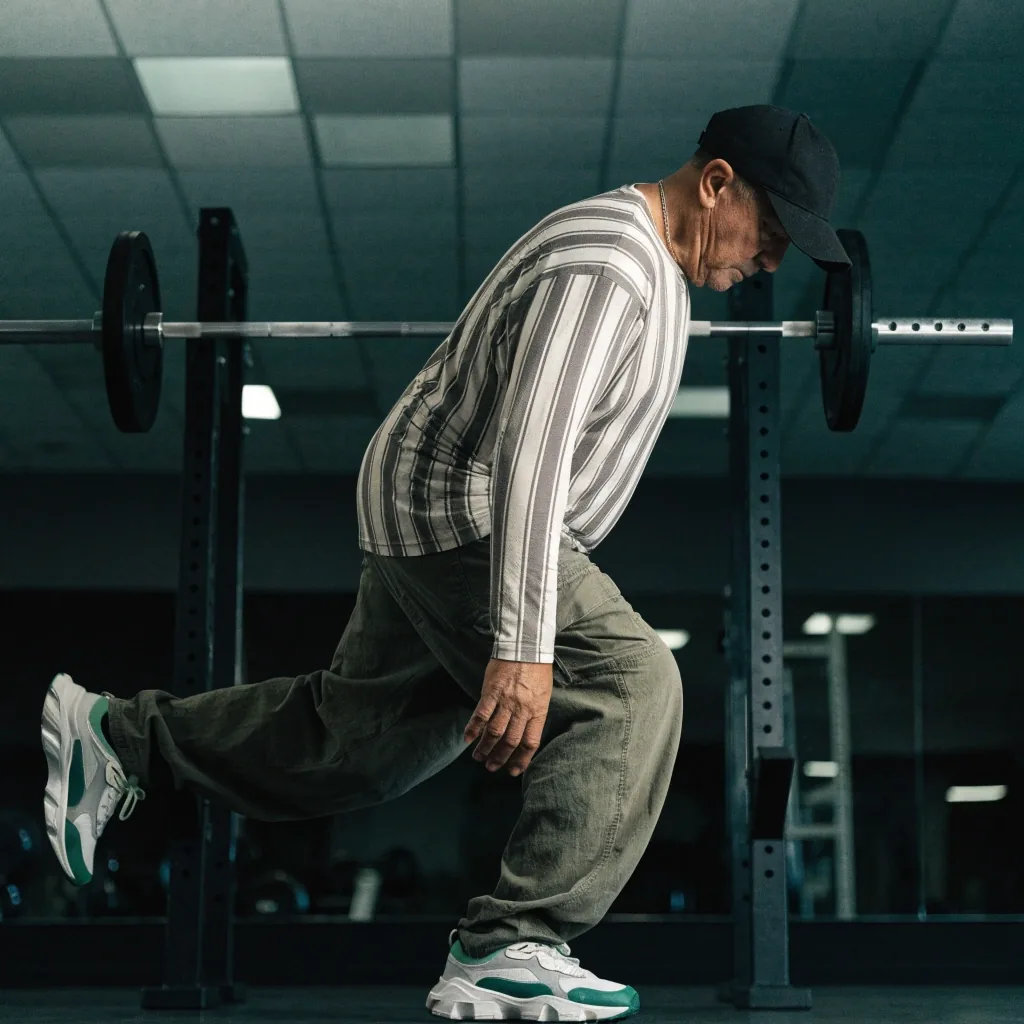
Single-leg balance work is practice. Thirty seconds per side, most days, is enough to keep the skill.
Balance work sits beside the bar, not behind it
Strong legs help you recover from a stumble. They do not stop the stumble happening. The nervous system needs its own practice at keeping your centre of mass over your feet while you stand still, turn, or reach for something.
The useful version of this work is boring and short. Stand on one leg while you brush your teeth. Walk heel to toe down a corridor. Practise standing up from a chair without using your hands. Do a set of slow step-ups with a controlled pause at the top. None of it needs equipment, and all of it can be built into a day you already have.
Two sessions a week, two different jobs
Resistance work and balance practice are often spoken about as if one replaces the other. They do not. Here is what each one is actually doing for you, and why the guidance asks for both.
Resistance training
Builds and holds the structure
- 01Loads bone through the hips, spine and wrists
- 02Keeps the muscle that moves you off the floor
- 03Needs progression to keep working
Balance practice
Trains the recovery reflex
- 01Practises catching yourself before you go down
- 02Improves with short, frequent sessions
- 03Fades quickly if you stop doing it
What raises your risk, and what you can change
Falls rarely have a single cause. The list below separates the things training can influence from the things that belong with your GP or pharmacist.
Low leg strength and slow sit-to-stand
Training changes this. Squats, step-ups and chair stands with a controlled tempo build the capacity to catch a stumble.
Poor standing balance and narrow gait
Training changes this. Balance practice is a skill you rehearse, and short daily doses work better than one long session.
Medication that affects blood pressure or balance
Not a training question. If you feel light-headed standing up, ask your GP or pharmacist to review what you take.
Home hazards: loose rugs, poor lighting, wet floors
Not a training question either, but it costs nothing to fix and it removes a whole category of trip.
Low body weight and low bone density
Partly trainable, partly medical. If you have had a fracture from a minor fall, that is a conversation for your GP before it is a programme.
Where this page's claims come from
Evidence & SourcesUK Chief Medical Officers' physical activity guidelines
Sets the two-sessions-a-week target and the separate balance recommendation for older adults.
Clinical commentary on resistance training and bone density
Explains why unfamiliar, progressive strain matters more than volume for skeletal adaptation.
Falls prevention guidance for older adults
Groups strength, balance practice and medication review as the areas worth acting on first.
This page is general education for men training in the UK. It is not a diagnosis and it does not replace advice from your GP, a physiotherapist or another clinician who knows your history.
Questions men ask before they start
01 Is lifting safe if I already have low bone density?
It can be, with the right programme. Resistance training is one of the few things that gives bone a reason to hold on to density. The adjustments that matter are coaching on technique, avoiding loaded spinal flexion, and building load gradually rather than testing your maximum. If you have been diagnosed with osteoporosis or have had a fragility fracture, get clearance from your GP or a physiotherapist first and bring that programme with you.
02 How long before balance work makes a difference?
Balance improves quickly because it is a skill, not a tissue change. Most men notice steadier single-leg stands and easier turns within a few weeks of daily practice. The catch is the other direction: stop for a month and much of it goes. That is why short sessions most days beat one long session a week.
03 Can I get the same effect from bodyweight work?
Some of it, up to a point. Bodyweight work is excellent for balance, control and the first months of training. The difficulty is progression — once you can do twenty controlled chair stands, the stimulus for bone drops because the strain is no longer unfamiliar. At that stage you need added resistance, whether that is a dumbbell, a weight vest or a machine.
04 What if I have knee or hip pain already?
Pain is a reason to change the exercise, not to skip the training. Most joint pain responds well to reduced range, slower tempo, and loading through a position that stays comfortable. If a joint is swollen, hot or giving way, that needs a clinician's opinion before a programme. Our exercise library covers the joint-friendly variations we use most often.
05 Do I need a gym, or can I train at home?
Home training works if you have a way to add load over time. A pair of adjustable dumbbells and a solid bench cover most of what this page describes. Gyms make progression easier because the next weight is always available, and that is genuinely the harder half of the problem to solve at home.
Start with the week, not the workout
Two resistance sessions and a few minutes of balance practice most days is the pattern UK guidance describes. If you want help turning that into something that fits your knees, your schedule and your starting point, get in touch and we will talk it through before you commit to anything.
Mature Male Power
15 DeansgateManchester, M3 1NW
United Kingdom
Monday to Friday, 9:00 AM – 6:00 PM