

Manchester · since the first squat rack
About Mature Male Power
A UK editorial resource for men over 45 who want to keep lifting. We write about joint-friendly programming, recovery, bone health and progression, and we show where each answer comes from.
- 01 Read the foundations
- 02 Pick joint-friendly work
- 03 Plan recovery days
- 04 Check the evidence
Start anywhere. Each chapter links back to the sources behind it.
Why this site exists
Written and reviewed in Manchester, for lifters across the UK.
Most strength advice online is written for men in their twenties. It assumes joints that have never been injured, recovery that happens overnight and a training week that never gets interrupted by work, family or a bad knee. That advice is not wrong. It is simply aimed at someone else.
Mature Male Power exists for the years after 45. The training principles do not change — load, progression and consistency still do the work — but the decisions around them do. Which pressing variation keeps a shoulder calm. How many hard sessions fit into a week that also contains a full-time job. What a sensible deload looks like when sleep has been poor. What resistance training over 45 should actually feel like the day after.
So we write for that reader. Plain explanations, no hype, no promises about what a programme will do for you, and a clear line between what the research supports and what is simply our opinion. If we cannot explain why a recommendation is there, it does not go on the site.
Editorial standards
Five rules we apply to every guide before it is published. They are the reason some articles are shorter than you might expect.
Our position
A heavier bar at fifty is a decision about the next thirty years, not about this month.
We treat strength training for mature men as a long game. The point is not a personal best next week. It is staying strong enough to carry shopping, climb stairs without thinking, and get off the floor unaided when you are eighty.
That framing changes the advice. It favours movements you can repeat for years over movements that look impressive once, and it makes recovery part of the programme rather than an afterthought.
It also means being honest about limits. We are an educational resource, not a clinic. If something hurts in a way that worries you, a doctor or physiotherapist should see it before a training plan does.
How a guide gets written
Two things happen before anything is published. One is research; the other is a long argument with ourselves about whether the advice survives a real training week.
Step one — read the research
We start with published guidance on resistance training over 45, joint loading, bone density and recovery. Position statements, systematic reviews and clinical guidance from UK bodies are preferred over single studies, and anything that reads like an advert is set aside.
Step two — test it in a real week
Then we ask whether the advice works for a man with a job, a family and a knee that complains on Mondays. Programmes are written as a full week, with warm-ups, rest days and a plan for the days you feel flat.
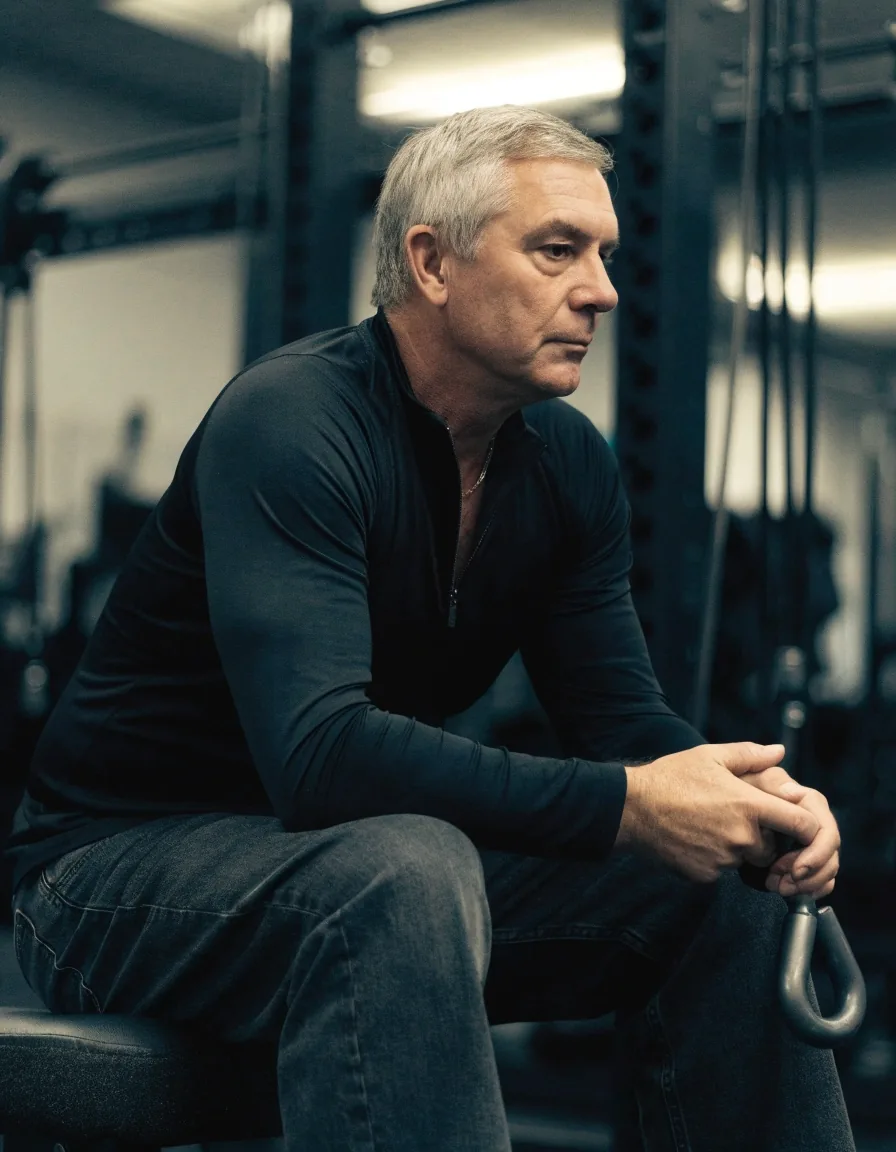
The reader we write for: experienced enough to know his own body, honest enough to want the caveats.
Who the site is for
Men over 45 in the UK who already train, or want to start again after years away from it. Some have lifted for decades and are adjusting around a shoulder or a hip. Others have never touched a barbell and are not sure where to begin at their age.
Both readers get the same treatment. We assume you are an adult who can read a programme and make a judgement. What you will not find is beginner shaming, before-and-after promises, or advice that only works if you have unlimited time and a physio on call.
What we can and cannot do for you
Being clear about the boundary is part of the editorial standard, not a disclaimer bolted on at the end.
If you are carrying an injury that has not been assessed, or you have a heart, lung or joint condition that affects exercise, speak to a GP or physiotherapist first. Bring the articles here to that conversation if they help — that is what they are for. The full list of research we draw on is kept on the Evidence & Sources page.
Questions we get asked
The four that come up most often in our inbox.
QWho writes the guides on this site?
A small editorial team based in Manchester. We are writers and long-time lifters rather than clinicians, and we work with published research instead of personal medical opinions. Every guide lists the sources it was built from, so you can check the reasoning yourself.
QIs this site aimed only at men who already lift?
No. The training foundations chapter assumes no current gym habit, and the exercise library includes entries written for someone starting from a low base. If you have not trained for years, begin there rather than in the more advanced programming pieces.
QDo you earn anything from the recommendations?
No. There are no affiliate links, sponsored articles or paid placements on the site, and we do not sell training plans. That keeps the advice free of any reason to push one method over another.
QHow often is older content updated?
Guides are reviewed when the research behind them changes, or when enough readers tell us a section reads badly in practice. Where a piece has been substantially rewritten, the older reasoning is replaced rather than layered over, so you are never reading two versions of the same advice.
Where to go next
If you are new here, the training foundations chapter is the place to start. It covers how to structure a week, how much to lift, and how to tell the difference between a hard session and a session that has gone wrong.
If you already train and something specific is bothering you, the exercise library and recovery chapters are more useful. And if you want to ask a question or flag something that reads badly, our contact details are below.