
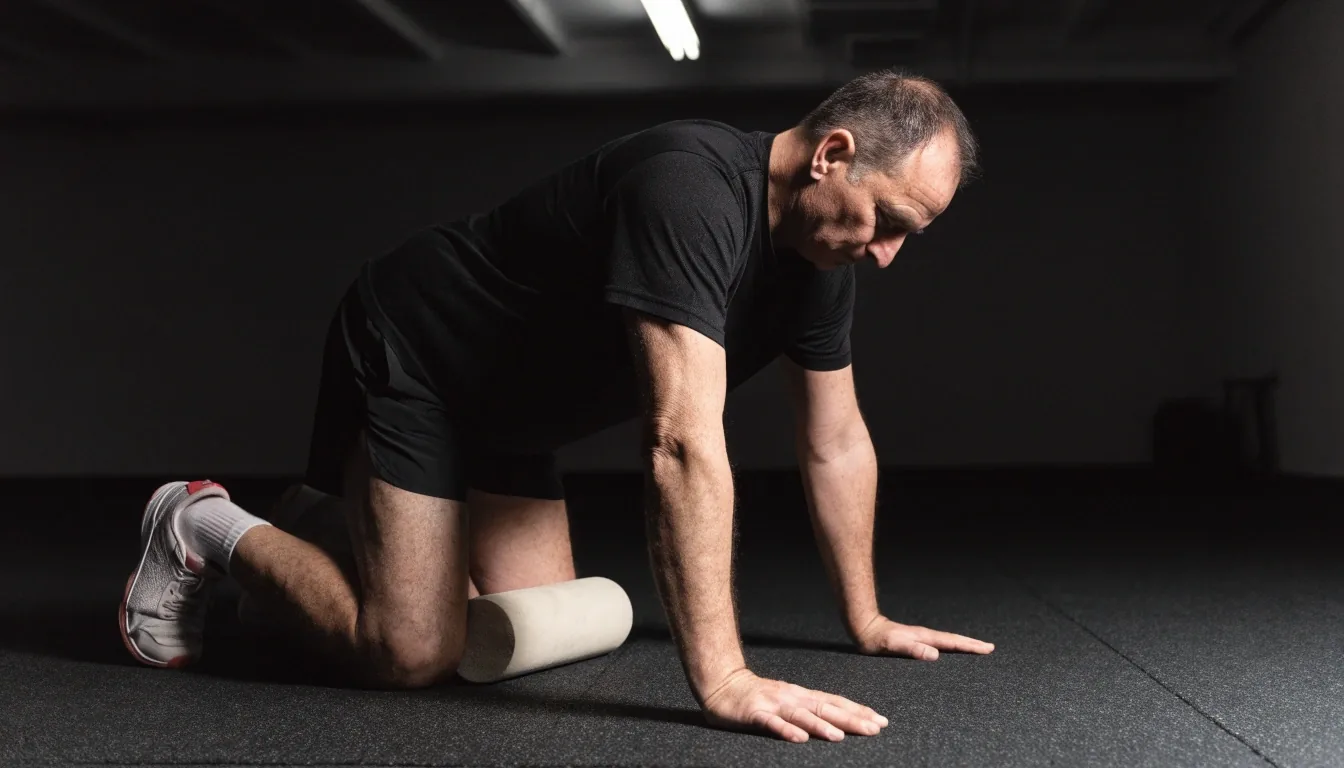
Manchester · Strength after 45
Recovery & Mobility
How sleep, mobility work, and load management shape strength progress after 45 — and how to adjust training around stiffness or an old injury that still talks back.
- 1 Sleep & readiness
- 2 Daily mobility reset
- 3 Load management
- 4 Deload & re-test
Recovery is training, not the gap between sessions
From around 45 the same session costs more to recover from than it did at 30. Muscle still adapts well to load, but the window between sessions widens, connective tissue takes longer to settle, and a night of poor sleep shows up in the bar speed the next day. That does not mean training less. It means the week needs a shape: hard days spread out, easy days that are genuinely easy, and a mobility routine short enough that you actually do it.
This page covers what to watch, what to change first when something feels off, and when stiffness is ordinary soreness versus a signal to back off and get it looked at. Everything here is general education — it is not a diagnosis, and an old injury that keeps flaring deserves a physiotherapist or your GP, not a forum thread.
What changes after 45
Four shifts show up in almost every training log once you are past 45. None of them is a reason to stop lifting — each one just moves a lever you can pull.
The rule that holds most weeks together
Train hard, then recover hard enough to train hard again.
If your next session is weaker than the last, the week was too dense — not too light. Add rest before you add volume.
A mobility routine you will actually keep
Mobility for mature men works best when it is small, daily, and tied to something you already do. Ten to fifteen minutes before a session, or while the kettle boils, beats a heroic ninety-minute stretch on Sunday that you never repeat.
The aim is not a deep range of motion you can only reach when warm. It is enough range to hold a good position under load and to get up off the floor without bracing on furniture.
Exercise Library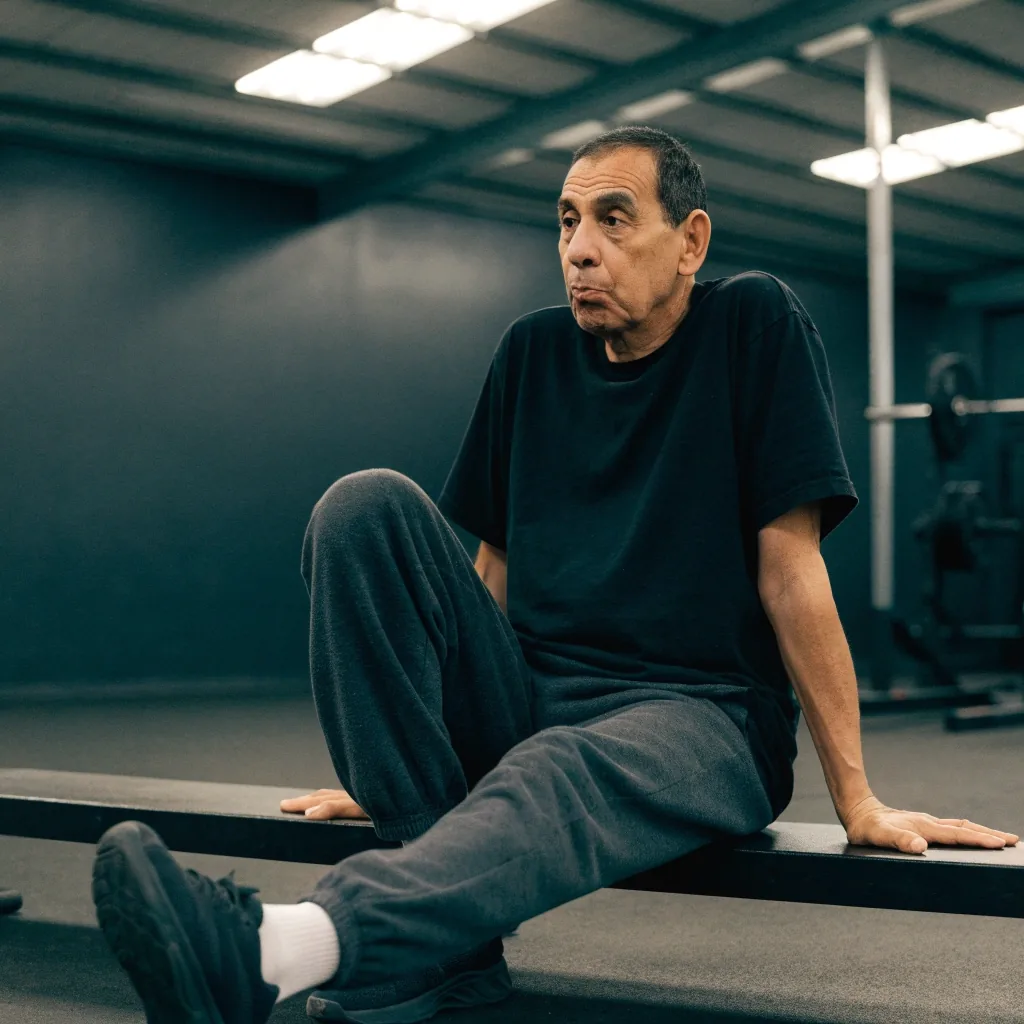
10–15 min
Daily reset
Hips, thoracic spine, ankles. Short holds, no bouncing.
Before lifting
Warm-up ramp
Ramp the exact movement you are about to load, with empty bar or light dumbbell.
After training
Down-shift
Two or three easy positions while heart rate settles. Not a second workout.
Sleep, soreness, and the signals worth acting on
Keep training
Morning stiffness that eases after ten minutes of moving, general soreness that fades within a couple of days, and joints that feel warm but stable during the lift.
Keep the plan, hold the weight steady for a week, and protect sleep. These are the ordinary costs of training and they respond to patience.
Back off and get it checked
Sharp pain in one spot, pain that wakes you at night, swelling that does not settle, a joint that gives way, or stiffness that is worse each week instead of better.
Stop loading that area, keep moving what does not hurt, and book a physiotherapist or your GP. This page cannot tell you what is wrong with your knee.

Load management over 45
Load management is the least glamorous part of strength training recovery in the UK, and the one that keeps you in the gym past 60. Three habits do most of the work.
- 1 Add weight in smaller steps than you did in your thirties, and only when the last set moved the same as the first.
- 2 Change one variable at a time — weight, reps, or rest. Changing all three in one week makes it impossible to know what worked.
- 3 Plan the easy week instead of waiting for it to be forced on you. Four to six weeks of building, then a lighter week at the same movements.
Two ways to spend a recovery day
A recovery day is a training decision, not a day off from thinking. One of these two approaches fits almost any week; the marker shows the one that suits a heavy training block.
Walking day
Easy pace, 30–45 minutes
Blood moving, joints unloaded, no target heart rate. Fits the day after a heavy lower-body session and does not eat into the next one.
Mobility day
Full routine, 15–20 minutes
The longer version of the daily reset: hips, thoracic spine, ankles, and shoulders, held a little longer than usual. Best placed mid-block when stiffness is building.
Adjusting around an old injury
Most men over 45 arrive with at least one joint that has a history — a shoulder that was operated on, a knee that clicks, a lower back that went once and never fully trusted again. The goal is not to work around it forever. It is to find the version of the movement that loads the muscle without irritating the joint, then build from there.
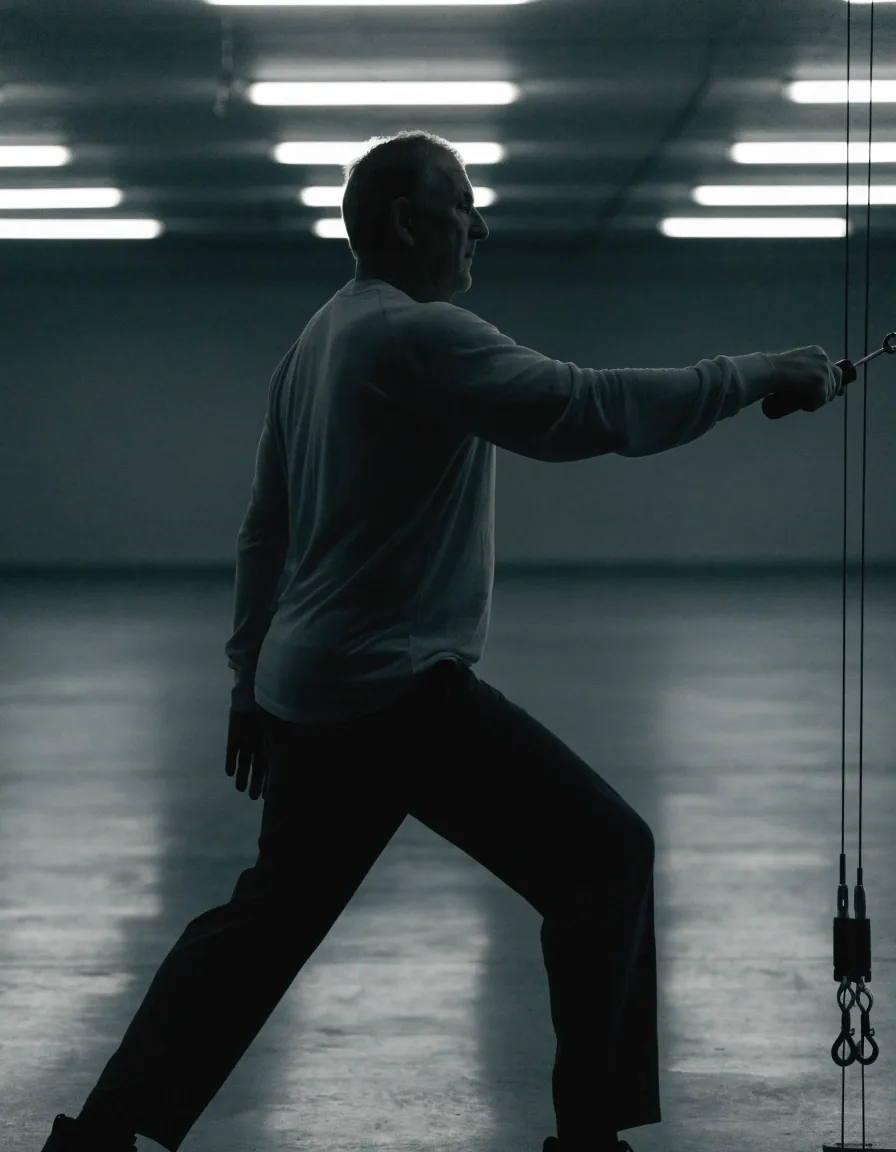
Slower tempo on the working phase is the simplest way to keep an irritated joint out of the lift while the muscle still gets loaded.
Where this guidance comes from
The recommendations on this site follow the muscle-strengthening activity guidance that UK public health bodies already publish for adults, and the general consensus from sports-medicine and exercise-science literature on training after middle age. Where the evidence is thin, we say so rather than filling the gap with a slogan.
Questions we get most often
How many rest days does a man over 45 actually need? answer
Most men do well with three lifting days a week separated by a day of easy movement, which lands two full rest days in the week. If you are new to training or returning after a long break, start with two lifting days and build up. What matters more than the exact count is that hard sessions on the same muscle group are not stacked back to back.
Should I stretch before or after lifting? answer
Do the ramp before: light sets of the exact movement you are about to load. Save longer held positions for after the session or for a separate mobility slot. Long static stretching right before a heavy lift can leave you feeling loose in a way that is not helpful when the bar is on your back.
My knee clicks but does not hurt. Should I stop training it? answer
A click on its own, with no pain, no swelling, and no giving way, is usually not a reason to stop. Keep the load comfortable, watch for pain or swelling over the next day, and if either shows up, back the load off and get it looked at. Sound without pain is noise; sound with pain is information.
Does poor sleep really affect strength gains? answer
Yes, and it shows up faster than most men expect. After a short night you will usually find the same weight feels heavier and the last set drops off. On those days, trim a set or two rather than pushing through — you are not building anything by grinding out a session you cannot recover from.
How do I know when a deload week is due? answer
Plan one every four to six weeks rather than waiting for a bad session to force it. The clearest signs you are overdue are waking stiffness that no longer clears with movement, weights that feel heavy at loads you handled two weeks ago, and motivation that has quietly gone. Take the lighter week at the same movements.
Keep going
Build the week around recovery, then let the weights climb.
Read how the training week is put together, work through joint-friendly variations, or send us a question about your own situation. We answer Monday to Friday, 9:00 AM to 6:00 PM.
15 Deansgate, Manchester, M3 1NW, United Kingdom
+44 161 496 0834 · [email protected]