

Strength training over 45
Train for strength that lasts another thirty years
Mature Male Power is a UK educational resource for men over 45 who want to keep lifting. Joint-friendly programming, recovery that keeps pace, bone health, and progression you can actually follow.
A week on the sheet
- 01 Screen 10 min
- 02 Load 35 min
- 03 Progress 2x weekly
- 04 Recover Daily
Where to start
Most men over 45 don't need a harder programme. They need one that survives a shoulder that clicks, a knee that swells after football, and a calendar with real weeks in it. The four guides below cover the ground in the order it usually helps.
Read them in sequence, or jump to the one matching the thing that's bothering you this month.
- 01 Training Foundations Sets, reps, tempo, and how hard to push when recovery is slower than it was at 30. Read the guide
- 02 Joint-Friendly Exercise Library Dumbbell rows, cable work, and regressions that keep the joint happy while the muscle still loads. Browse exercises
- 03 Recovery & Mobility Sleep, walking, warm-ups, and the mobility work that keeps sessions repeatable week to week. Plan recovery
- 04 Bone Health & Falls Prevention Loading bone, training balance, and what the UK activity guidelines mean for a man past 45. Read the guide

Why the approach is different
The load stays honest. The recovery gets the respect it deserves.
Strength still builds
Muscle responds to resistance training at any age. The trick is dosing it so the tendon, joint, and sleep pattern can keep up rather than chasing the load a younger man would use.
Joints set the tempo
Range, angle, and grip get chosen around what a shoulder or knee tolerates today. A slower tempo with a clean path beats a heavier lift that leaves you sore for a week.
Evidence over folklore
Guidance draws on published strength and physical-activity research and on UK public health guidance. Sources are listed, so you can check the reasoning rather than trust a headline.
Four training weeks, written out
A sample block for a man in his fifties training twice a week. Use it as a shape, not a prescription.
This is the rhythm the rest of the site expands on. Training Foundations goes through sets, tempo, and rest in detail.
A fair question
Is it too late to start lifting at 52?
No. Strength training for mature men is one of the few things that gets a clear yes from the research, provided the programme matches the body doing it. The muscle still responds; the joints need more say in how fast you progress. Start lighter than pride suggests, keep the range comfortable, and let the log — not the mirror — tell you when to add load.
Common ground, and the honest differences
What we share with most programmes
- 01 Progressive overload across weeks, logged so it can be checked.
- 02 Compound movements, free weights, and cables as the base of the week.
- 03 Two to three sessions a week is enough to see change.
What we add for men past 45
- 01 Joint-friendly exercise variations and substitutions when something flares.
- 02 Recovery and mobility planned as part of the week, not as an afterthought.
- 03 Bone loading, balance work, and falls-prevention context for the long term.
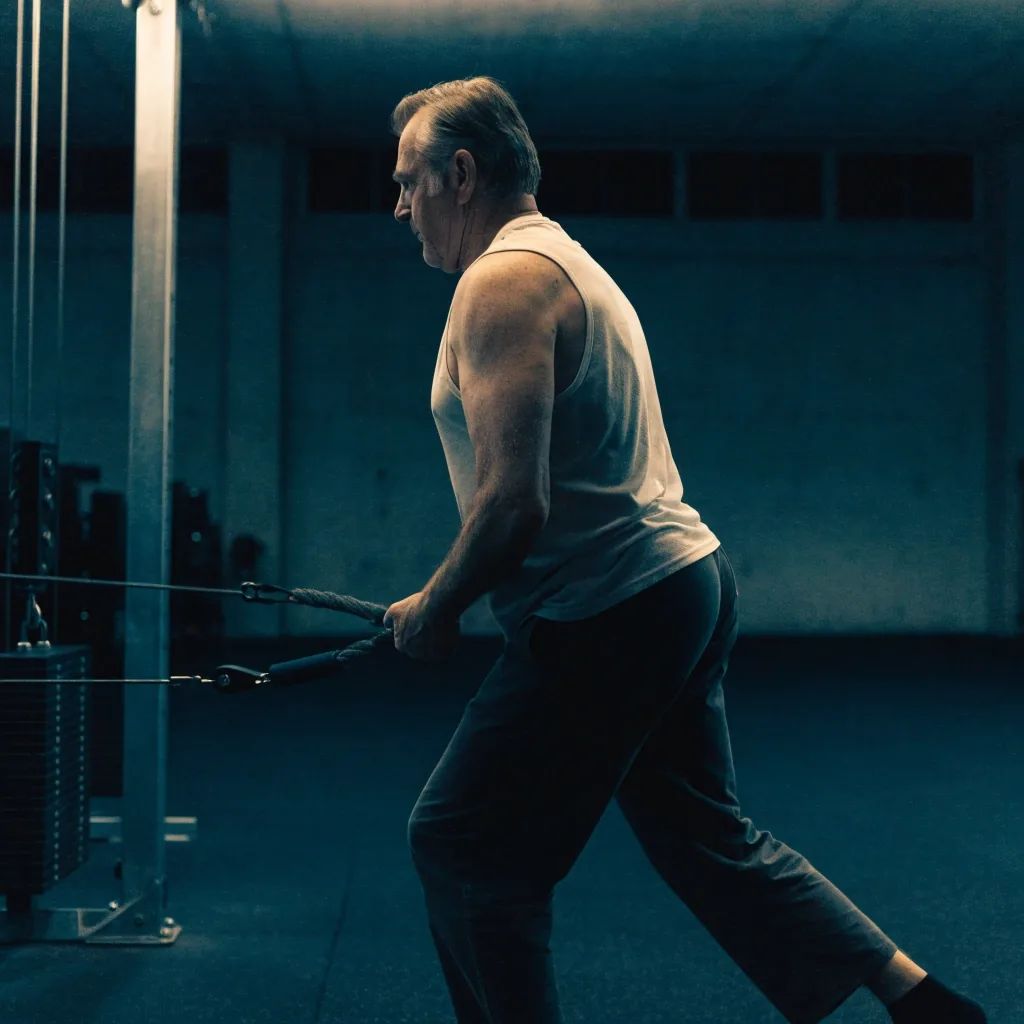
Slow tempo, single arm, side angle — the working shape behind most of the exercise library.
How the guidance is put together
Every guide on this site follows the same three-step build, so you know what you're reading and where it came from.
- 01 Start with the question What a man over 45 is actually trying to solve — a stiff shoulder, a stalled bench, a knee that objects to running.
- 02 Read the research Strength and physical-activity literature, plus UK guidance on muscle-strengthening activity for adults.
- 03 Write the practical version Sets, reps, substitutions, and what to do when a joint says no — with the source listed so you can go deeper.
The full reading list, including the studies behind each claim, sits on Evidence & Sources.
Questions that come up before the first session
01 Do I need a gym, or can I start at home?
Both work. A pair of adjustable dumbbells and a bench cover most of the library; a gym gives you cables and a wider range of loads. What matters more than the room is having a load you can adjust in small steps.
02 How long before I notice a difference?
Most people feel steadier on the movements within a few weeks and see the logged numbers move over a couple of months. Strength gains for mature men tend to be slower and more durable than the early jumps in your twenties — that's normal, not a warning sign.
03 What if I have an existing injury or a diagnosis?
This site is general education, not medical advice. If you have a diagnosed condition, recent surgery, or pain that doesn't settle, speak to your GP or a physiotherapist before starting, and bring these guides to that conversation as a starting point.
04 Does this replace the gym work I already do?
It's meant to slot into it. Keep the lifts you enjoy and progress well; use the joint-friendly library to swap out the ones that keep flaring, and use the recovery guidance to space sessions so the next one is as good as the last.
05 Where should I go next?
If you want the reasoning first, read the training foundations. If a joint is the issue, start with the exercise library. If you're training well but feel beaten up, start with recovery and mobility.
Take the first guide with you
Training Foundations walks through sets, reps, tempo, and how to judge a week's work when recovery is slower than it used to be. It's the best place to start if you haven't trained seriously before, or if it's been a while.
Getting in touch
- Address
- 15 Deansgate, Manchester, M3 1NW, United Kingdom
- Phone
- +44 161 496 0834
- [email protected]
- Hours
- Monday to Friday, 9:00 AM – 6:00 PM